

Choosing the right laptop stand manufacturer is an important decision for businesses that need reliable products for retail, wholesale, corporate procurement, promotional programs, or private-label brands. A laptop stand may look like a simple accessory, but its stability, load-bearing capacity, material quality, adjustability, surface finish, and production consistency can directly affect the user experience.
For bulk buyers, selecting a manufacturer based only on the lowest quotation can create problems later, including inconsistent quality, long lead times, limited customization, and difficulties with after-sales service. A better approach is to evaluate the manufacturer's production capabilities, product quality, customization options, quality control, pricing structure, and ability to support long-term orders.
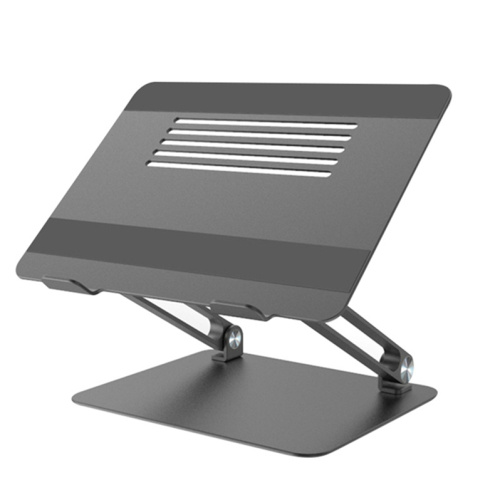
Why Does the Choice of Laptop Stand Manufacturer Matter?
A reliable manufacturer does more than produce a finished product. The right supplier should be able to understand your product requirements, recommend suitable materials and structures, maintain consistent quality across production batches, and provide technical support when customization is required.
This becomes particularly important when purchasing custom laptop stands or placing large-volume orders. Small differences in dimensions, material thickness, surface treatment, or assembly quality can become significant when thousands of units are produced.
Before choosing a supplier, businesses should therefore evaluate both the product itself and the manufacturer's overall capabilities.
1. Evaluate the Manufacturer's Production Capabilities
The first step is to determine whether the manufacturer has the equipment and production processes needed for your project.
Depending on the laptop stand design, manufacturing may involve processes such as:
- CNC machining
- Sheet metal cutting
- Stamping
- Bending
- Die casting
- Injection molding
- Welding
- Surface treatment
- Assembly
- Packaging
A manufacturer with integrated production capabilities can make it easier to control quality and coordinate different stages of manufacturing.
When evaluating a laptop stand manufacturer, ask what processes are handled in-house and which processes are outsourced. This can give you a clearer understanding of production control and lead-time management.
2. Check the Materials Used for Laptop Stands
Material selection has a direct impact on the strength, weight, appearance, durability, and cost of a laptop stand.
Common materials include aluminum, steel, stainless steel, and engineering plastics. Aluminum is often selected when lightweight construction, corrosion resistance, and a premium appearance are important. Steel can provide high strength and stability, while plastic may be suitable for lightweight and cost-sensitive designs.
The best material depends on the intended application and product positioning.
When comparing suppliers, ask about material specifications, thickness, grades, and whether the manufacturer can provide material documentation when required.
3. Consider Product Stability and Load Capacity
A laptop stand should provide stable support during everyday use. A poorly designed structure may wobble, slide, or deform under load.
For this reason, buyers should evaluate:
- Maximum recommended load
- Base structure
- Center of gravity
- Joint strength
- Anti-slip feet or pads
- Material thickness
- Overall structural rigidity
For adjustable or foldable designs, hinges and moving joints are particularly important. They should maintain their position during use while allowing convenient adjustment.
A professional laptop stand supplier should be able to provide product specifications and, where appropriate, test data to demonstrate structural performance.
4. Look at Customization and OEM/ODM Capabilities
If you are developing your own brand, standard products may not be enough. In this case, it is important to choose a manufacturer that offers OEM and ODM laptop stand services.
Possible customization options may include:
- Product dimensions
- Structure and shape
- Material
- Color
- Surface finish
- Logo placement
- Packaging
- Accessories
- Product labels
OEM manufacturing is generally suitable when you already have a product design and need a manufacturer to produce it. ODM services can be useful when you need support with product development, structural design, or adapting an existing product concept.
5. Review Quality Control Procedures
Quality control is one of the most important factors when selecting a laptop stand manufacturer for bulk orders.
Ask how the manufacturer manages quality at different production stages. Depending on the product, inspection may include dimensional checks, material inspection, surface inspection, assembly testing, load testing, and packaging inspection.
For large orders, consistent quality is particularly important. A product that passes inspection during sampling but shows significant variation during mass production can create additional costs and customer complaints.
A good quality control system should therefore cover incoming materials, production processes, finished products, and final packaging.
6. Ask About MOQ and Production Capacity
Minimum order quantity can vary significantly between manufacturers. Before requesting a quotation, determine your expected order volume and ask whether the supplier can support your purchasing plan.
For new products, you may prefer a supplier that can support relatively flexible initial quantities. For established products, production capacity becomes more important because delays can affect inventory planning and sales.
Also ask about monthly production capacity and how the manufacturer handles peak-season demand.
7. Compare Lead Times
Production lead time is another important consideration for businesses purchasing laptop stands in bulk.
Lead time may depend on product complexity, order quantity, customization requirements, raw material availability, tooling, packaging, and production scheduling.
For customized products, the overall project timeline may include:
- Product design confirmation
- Prototype development
- Sample production
- Sample approval
- Tooling if required
- Mass production
- Quality inspection
- Packaging
Ask the manufacturer to provide an estimated timeline before placing the order so that production and inventory plans can be coordinated.
8. Evaluate Pricing Beyond the Initial Quotation
Price is important, but the lowest quotation does not always represent the best value.
The final cost of a laptop stand can be affected by material, dimensions, manufacturing processes, surface treatment, packaging, customization, order quantity, tooling, and shipping requirements.
When comparing suppliers, make sure quotations are based on comparable specifications. A lower price may reflect thinner material, simpler finishing, fewer quality inspections, or different packaging.
Instead of comparing unit prices alone, consider the overall total cost of ownership, including product quality, defect rates, lead time, maintenance, packaging, and logistics.
9. Check Packaging and Shipping Support
Laptop stands can be vulnerable to scratches, deformation, and surface damage during transportation if packaging is not properly designed.
A reliable manufacturer should be able to recommend suitable packaging according to the product structure and shipping method.
For branded products, packaging can also be part of the customization process. Retail boxes, instruction manuals, labels, protective materials, and shipping cartons may all be customized according to your requirements.
10. Evaluate Communication and Technical Support
Communication becomes particularly important when developing a customized laptop stand.
The manufacturer should be able to understand technical drawings, product specifications, packaging requirements, and quality standards. Clear communication during sampling can prevent costly modifications after mass production begins.
Before selecting a supplier, evaluate how quickly and accurately they respond to technical questions. A manufacturer that provides clear answers and practical recommendations can be a valuable long-term partner.
What Should You Ask a Laptop Stand Manufacturer?
Before placing an order, consider asking the following questions:
- What materials are available?
- What manufacturing processes are available in-house?
- Can you provide OEM or ODM services?
- What is the MOQ?
- What is the typical production lead time?
- What quality control procedures do you use?
- Can you provide samples before mass production?
- Can the product, logo, and packaging be customized?
- What is the maximum recommended load?
- How do you handle defective products or quality issues?
The answers to these questions can help you compare different laptop stand suppliers more objectively.
OEM vs. ODM: Which Laptop Stand Manufacturing Solution Should You Choose?
| Factor | OEM | ODM |
|---|---|---|
| Design | Customer provides the design | Manufacturer provides or supports the design |
| Customization | Based on customer specifications | Can be adapted from existing designs |
| Development | Customer-led | Manufacturer-supported |
| Best For | Established product designs | Brands needing product development support |
How to Compare Different Laptop Stand Manufacturers
After collecting quotations and product samples, create a simple supplier evaluation system. Compare each manufacturer based on the factors that are most important to your business.
| Evaluation Factor | What to Look For |
|---|---|
| Product Quality | Materials, stability, finish, durability |
| Manufacturing | Equipment, production capacity, process control |
| Customization | OEM, ODM, logo, color, packaging |
| MOQ | Whether order quantities fit your business |
| Lead Time | Sampling and mass production schedule |
| Price | Competitive pricing based on the same specifications |
| Support | Communication, technical assistance, after-sales service |
FAQ
1. What should I look for in a laptop stand manufacturer?
Look for manufacturing experience, stable product quality, suitable production capabilities, customization options, reasonable MOQ, reliable lead times, quality control, and responsive technical support.
2. Can a laptop stand manufacturer provide custom designs?
Yes. Many manufacturers offer OEM or ODM services, including customized dimensions, materials, colors, structures, logos, and packaging.
3. What materials are commonly used for laptop stands?
Aluminum and steel are widely used because they provide good structural strength. Engineering plastics and other materials may also be suitable depending on the product design and target price.
4. What is the MOQ for custom laptop stands?
MOQ varies by manufacturer and depends on factors such as product complexity, tooling, materials, customization, and production requirements. It is best to confirm MOQ based on your specific project.
5. Should I request samples before placing a bulk order?
Yes. Sampling allows you to evaluate dimensions, stability, materials, surface finish, packaging, and overall product quality before committing to mass production.